

Skin Cancer Screening in Wayne & West Chester, PA
Why Skin Cancer Screenings Matter
Skin cancer is the most commonly diagnosed cancer in the United States. About 9,500 Americans are diagnosed with some form of it every day, according to the American Academy of Dermatology. The good news is that when caught early, most skin cancers are highly treatable, which is exactly what a routine screening is designed to do.
Many skin cancers develop gradually and cause no pain in their early stages, so changes can go unnoticed until they become more serious. A screening lets your dermatologist examine your skin from head to toe and catch a suspicious spot while treatment is still simple.
If you have had skin cancer before, regular screenings matter even more, since a previous diagnosis raises your risk of developing another one.
Signs of Skin Cancer to Watch For
Not every mole or spot is cause for concern, but it is worth scheduling an evaluation if you notice:
A Pearly or Translucent Bump
A Sore That Repeatedly Heals and Returns
Pink or Red Scaly Patches That Continue to Grow
Dark Streaks Beneath a Fingernail or Toenail
Dark Lesions on the Palms, Soles, or Inside the Mouth
Large Brown Spots With Darker Speckles
The ABCDE Warning Signs of Melanoma
One of the easiest ways to monitor your own skin between visits is the ABCDE method:
A: Asymmetry
One half of a mole does not match the other half.
B: Border
The edges look irregular, blurred, or uneven.
C: Color
The mole contains more than one color, or the color is changing.
D: Diameter
The spot is larger than about 6 millimeters, roughly the size of a pencil eraser, though some melanomas are smaller.
E: Evolving
The mole is changing in size, shape, color, or appearance over time.
If you notice any of these signs, do not wait. A prompt evaluation can determine whether further testing is needed.
What to Expect During Your Screening
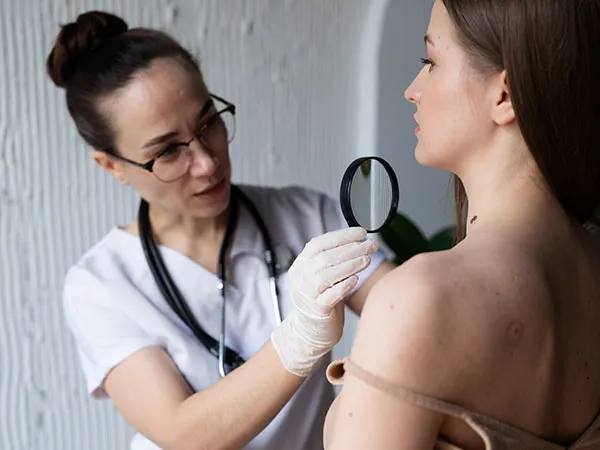
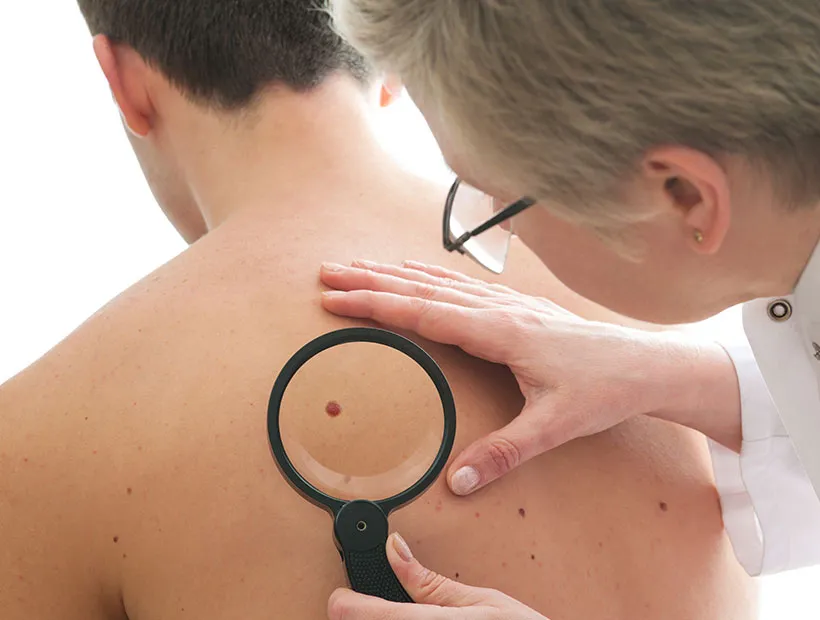
A skin cancer screening is a simple, non-invasive visual examination.
Medical History
We will start with your personal and family history, past skin cancers, sun exposure, and any spots you have noticed changing.
Full-Body Examination
Your dermatologist examines your skin from head to toe, including moles, freckles, and other lesions, paying close attention to any specific area of concern.
Next Steps
If a lesion looks suspicious, your dermatologist will explain what additional evaluation, such as a biopsy, may be recommended.
Who Should Schedule a Skin Cancer Screening?
Anyone can develop skin cancer, but some people are at higher risk and benefit from routine screening, including if you:
Have Fair Skin, Light Eyes, or Light Hair
Spend Significant Time Outdoors
Have a History of Frequent Sunburns
Have Used Tanning Beds
Have a Personal or Family History of Skin Cancer
Have Numerous or Unusual-Looking Moles
If you are unsure whether it is time for a screening, our team can help you determine the right schedule based on your risk factors.
Why Choose Main Line Dermatology for Skin Cancer Screenings?
Comprehensive Skin Evaluations
Full-body examinations that look closely at moles, lesions, and other changes that may need further evaluation.
Personalized Care
We take the time to understand your history and risk factors before recommending next steps.
Focus on Early Detection
Our goal is to identify potential concerns as early as possible, when treatment is simplest.
Board-Certified, Experienced Team
Whether it is your first screening or a routine follow-up, you can count on attentive, patient-centered care.
Hear From Our Patients
Schedule Your Skin Cancer Screening Today
Taking a proactive approach to your skin health can make a meaningful difference. Whether you have noticed a changing mole, have risk factors for skin cancer, or simply want the reassurance of a professional exam, our team is here to help.
Frequently Asked Questions
The right screening schedule depends on your age, medical history, and individual risk factors. During your visit, your dermatologist will recommend a plan that is appropriate for you.
If we identify a lesion that needs further evaluation, we will explain our findings and discuss next steps. In some cases, a biopsy may be recommended to determine whether it is cancerous.
No. A skin cancer screening is a visual examination of your skin and is generally painless. If a biopsy is recommended, your provider will explain the procedure before moving forward.
Yes. Monthly self-examinations help you become familiar with your skin so you can recognize new or changing moles or lesions and know when to schedule an appointment.
Yes. Sunscreen helps reduce your risk, but no preventive measure is completely effective. Regular skin examinations and professional screenings remain an important part of protecting your skin health.
Schedule an evaluation if you notice a new or changing mole, a sore that does not heal, or a spot that bleeds. Routine screenings are also recommended for many adults, especially those at increased risk.