

Warts & Moles in Wayne & West Chester, PA
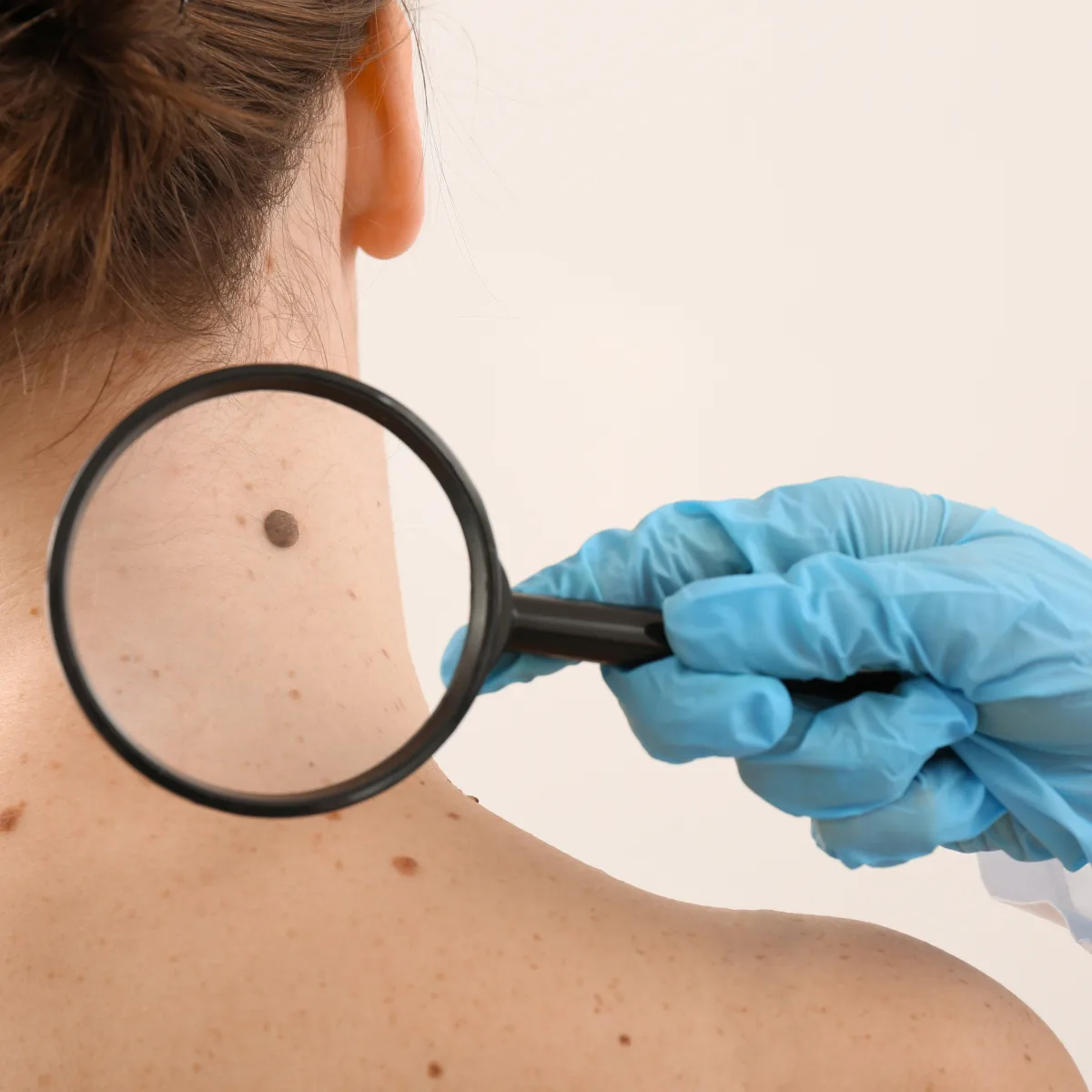

Expert Care for Common Skin Growths
Warts and moles are common skin growths, and most are harmless. However, a growth that changes in appearance, becomes painful, bleeds, or does not respond to treatment may need professional evaluation.
At Main Line Dermatology, our dermatology team provides wart and mole evaluation and treatment in Wayne and West Chester, PA. We can examine a growth, determine whether additional testing is needed, and recommend an appropriate treatment or removal approach.
Whether you’re concerned about a changing mole, a new skin growth, or a persistent wart, a professional dermatology evaluation can help you understand what you’re dealing with.
Moles and Nevi
Moles, also called nevi, are brown or black growths that are usually round or oval. They may be flat or raised and can vary in color and texture.
Moles develop when melanocytes, the cells responsible for skin pigmentation, grow in clusters rather than being distributed throughout the skin. Most moles develop by age 20, although new moles can appear later in life. Most adults have between 10 and 40 moles.
Most moles are harmless. However, changes in a mole’s size, shape, color, or appearance should be evaluated because some changes may be associated with skin cancer.
Types of Moles
Common Moles
Common moles are generally small, round or oval growths that may be flat or raised. They can range from light brown to darker brown or black.
Congenital Nevi
Congenital nevi are moles that are present at birth. Larger congenital moles have a greater risk of developing into skin cancer and may require closer observation.
Atypical or Dysplastic Nevi
Atypical or dysplastic nevi are irregularly shaped moles that are generally larger than average. They may have darker centers with lighter or uneven borders.
People with numerous moles may have a higher risk of developing skin cancer. Main Line Dermatology notes that people with 50 or more moles have an increased risk.
When Should a Mole Be Checked?
Knowing what is normal for your skin can make it easier to notice changes.
You should schedule a dermatology evaluation if a mole:
- Changes in size
- Changes in shape
- Develops irregular borders
- Changes in color
- Develops multiple colors
- Becomes painful or itchy
- Becomes scaly
- Starts bleeding
- Looks noticeably different from your other moles
The ABCDE method can also help identify changes that deserve professional attention:
- A - Asymmetry: One half does not match the other.
- B - Border: The edges are irregular, scalloped, or poorly defined.
- C - Color: The color varies throughout the lesion.
- D - Diameter: The lesion is typically larger than 6 millimeters, although melanoma can be smaller.
- E - Evolving: The mole changes in size, shape, color, or appearance.
If you notice a concerning change, don’t try to determine on your own whether a mole is harmless. A dermatologist can examine it and recommend further evaluation when necessary.
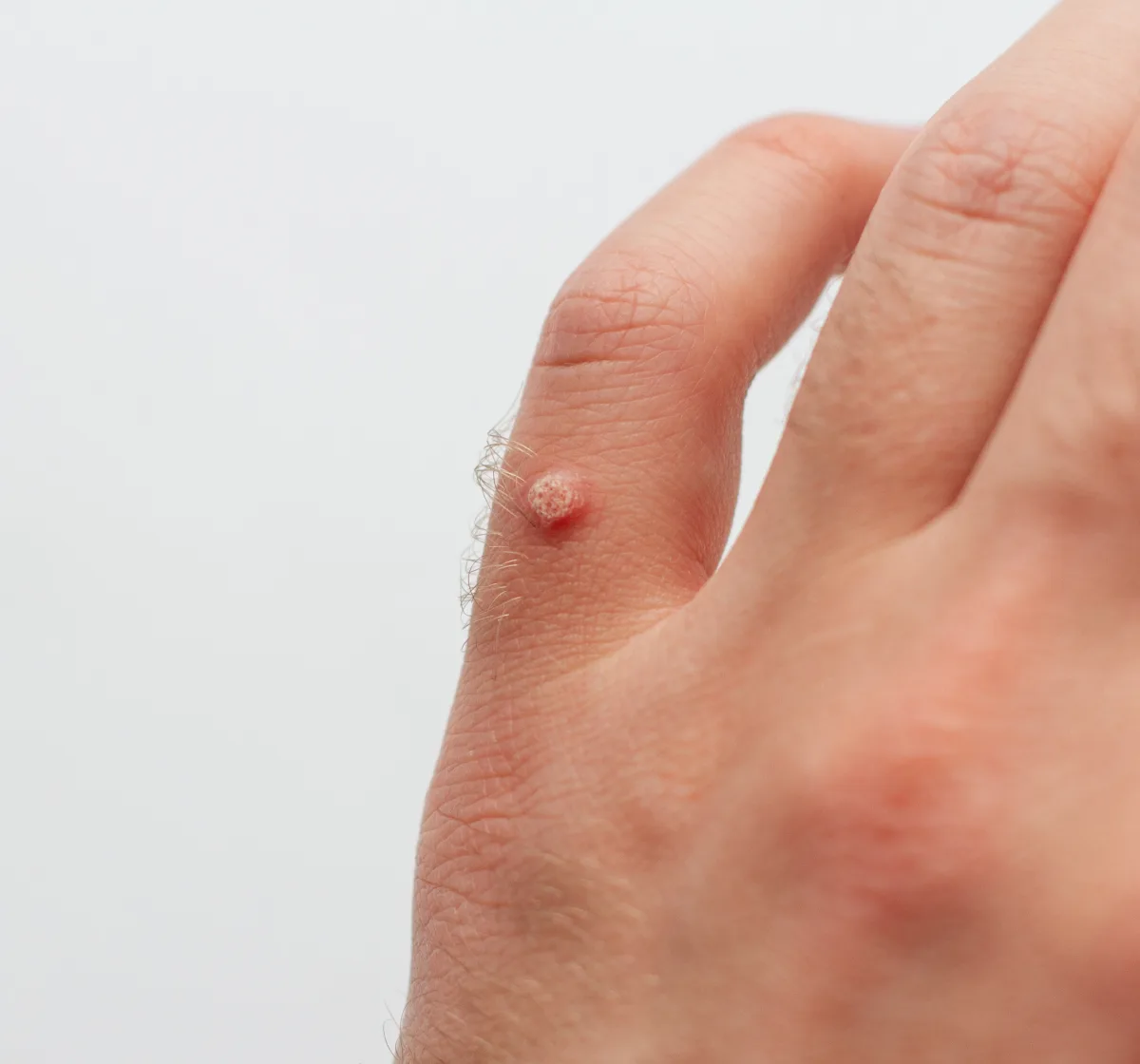
Understanding Warts
Warts are generally harmless skin growths caused by different forms of the human papillomavirus (HPV). They most commonly occur on the hands and feet but can develop on other parts of the body.
Warts may be flat and smooth, raised and dome-shaped, or have a rough, cauliflower-like appearance. They can occur individually or in groups and may spread from one part of the body to another or from person to person.
Although many warts are painless, they can become bothersome, painful, or difficult to remove.
Common Types of Warts
Common Warts
Common warts often develop on the backs of the fingers, toes, and knees. They are usually skin-colored, dome-shaped, and may occur individually or in groups
Filiform Warts
Filiform warts are narrow, flesh-colored growths that commonly appear around the eyelids, face, neck, or lips. They may sometimes itch or bleed.
Flat Warts
Flat warts are slightly raised and generally flesh-colored or white. They commonly occur on the face and forehead and are more common among children and teenagers.
Plantar Warts
Plantar warts develop on the soles of the feet. Because they occur on weight-bearing areas, they can sometimes become painful. They may have a rough or cauliflower-like appearance and can occur in groups.
Periungual and Subungual Warts
These warts develop around or underneath the fingernails or toenails. Because of their location, they can interfere with healthy nail growth and may require professional treatment.
Genital Warts
Genital warts can occur around the genital and pubic areas and may also develop inside the vagina, anal canal, or mouth. Because they are sexually transmitted and highly contagious, Main Line Dermatology recommends that genital warts be evaluated and treated by a physician.
When Should You See a Dermatologist for a Wart?
A wart may not require treatment if it is small and does not bother you. Professional evaluation may be appropriate when:
- The wart is painful
- It continues to grow or spread
- Its color or appearance changes
- It interferes with daily activities
- It is around or underneath a nail
- Home treatment has not worked
- You have a genital wart
Main Line Dermatology’s current patient education information recommends seeing a dermatologist when wart self-treatment has not worked after approximately 4 to 12 weeks, or sooner if the wart is painful or changes in appearance.
How Are Warts and Moles Evaluated?
Your dermatologist will examine the growth and discuss any changes you’ve noticed.
For a mole, your provider may evaluate its:
- Size
- Shape
- Color
- Border
- Location
- Appearance over time
If a mole appears suspicious, your dermatologist may recommend a biopsy to determine whether it is cancerous. Surgical removal may also be recommended when appropriate.
For a wart, your dermatologist will evaluate its appearance and location and determine whether professional treatment is appropriate.
An accurate diagnosis helps your dermatologist determine whether observation, removal, biopsy, or another treatment approach is appropriate.
Treatment Options for Warts and Moles
Treatment depends on the type of growth, its location, appearance, and your individual needs.
Wart Treatment
Main Line Dermatology’s current patient education information describes several professional approaches for wart removal, including:
- Cryotherapy, which freezes the wart
- Electrosurgery, which uses an electrical current to destroy wart tissue
- Laser surgery
- Other treatment approaches when appropriate
Your dermatologist will recommend the most appropriate approach based on the type and location of the wart and whether previous treatment has been attempted.
Mole Evaluation and Removal
Most moles do not require treatment. However, a suspicious or changing mole may require a biopsy or surgical removal.
If you’re concerned about a mole or have noticed a recent change, professional evaluation can determine whether further testing or removal is appropriate.
Why Choose Main Line Dermatology for Warts & Moles?
30+ Years Serving Our Community
Main Line Dermatology has proudly served the community for more than 30 years, providing trusted dermatology care to generations of patients.
Experienced Dermatology Team
Our experienced dermatology team provides comprehensive medical and surgical dermatology care for a wide range of skin conditions and growths.
Careful Evaluation
Not every mole or wart requires treatment, but changes should not be ignored. Our providers carefully evaluate unusual or changing growths and recommend additional testing when appropriate.
Personalized Treatment
Treatment is based on the type, location, appearance, and individual characteristics of your wart or mole.
Convenient Local Care
Our Wayne and West Chester, PA offices provide convenient access to dermatology care for patients throughout the Philadelphia Main Line, Chester County, and surrounding communities.
Hear From Our Patients
Choosing a dermatologist for evaluation or treatment of a skin growth is an important decision. See what patients have shared about their experiences with Main Line Dermatology.
Have a Wart or Mole You’d Like Checked?
If a mole has changed or a wart isn’t going away, getting it evaluated can help you understand what you’re dealing with and whether treatment is needed.
Schedule an appointment with Main Line Dermatology for wart and mole evaluation in Wayne or West Chester, PA.
Warts & Moles FAQs
Yes. Most moles are harmless. However, changes in size, shape, color, or appearance can sometimes indicate a potentially concerning growth and should be evaluated.
Changes in asymmetry, border, color, diameter, or evolution can be warning signs. A mole that becomes painful, itchy, scaly, or starts bleeding should also be evaluated.
Main Line Dermatology identifies common moles, congenital nevi, and atypical or dysplastic nevi among the types of moles that may require monitoring. People with 50 or more moles may also have an increased risk of skin cancer.
Warts are caused by different forms of human papillomavirus (HPV). They can spread from person to person and from one part of the body to another.
Some warts may eventually disappear without treatment, although this can take time. Persistent or bothersome warts may require professional treatment.
See a dermatologist if a wart is painful, changes in appearance, continues to spread, or does not respond to self-treatment. Warts around or underneath the nails and genital warts should also be professionally evaluated.
Professional treatment may include cryotherapy, electrosurgery, laser surgery, or other appropriate approaches. Your dermatologist will recommend treatment based on the type and location of the wart.
Yes. If a mole needs to be removed because it appears suspicious or for another appropriate reason, your dermatologist may recommend surgical removal. A biopsy may also be performed to determine whether a suspicious mole is cancerous.
Main Line Dermatology provides wart and mole evaluation and treatment in Wayne and West Chester, PA, serving patients throughout the Philadelphia Main Line, Chester County, and surrounding communities.
Most patients do not need a referral, although some insurance plans may require one. Check with your insurance provider before scheduling.