
Rosacea Treatment in Wayne & West Chester, PA

Personalized Care for Rosacea
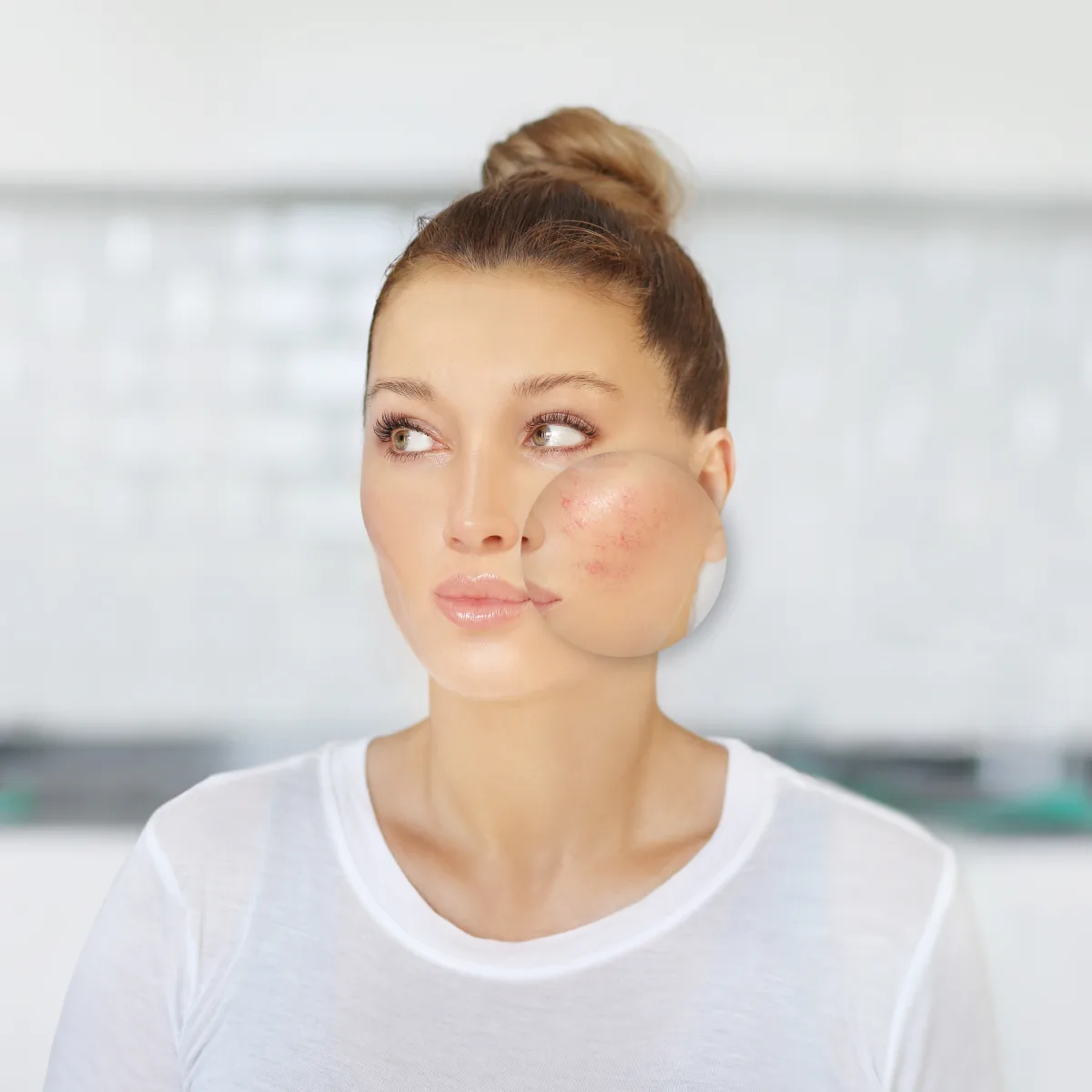
Persistent facial redness, frequent flushing, visible blood vessels, or acne-like bumps can be difficult to manage, especially when symptoms repeatedly return. Rosacea is a chronic skin condition that can affect the cheeks, nose, chin, forehead, and eyelids and may also cause burning, itching, swelling, or irritated eyes.
At Main Line Dermatology, we provide personalized rosacea treatment in Wayne and West Chester, PA. Your dermatologist will evaluate your symptoms and skin and develop a treatment approach based on your individual condition.
Rosacea can vary significantly from one person to another. Some people primarily experience persistent redness and flushing, while others develop visible blood vessels, bumps, or eye symptoms. Understanding your symptoms and potential triggers is an important part of managing the condition.
What Is Rosacea?
Rosacea is a chronic inflammatory skin condition that most commonly affects the face. It can cause persistent redness, flushing, acne-like bumps, visible small blood vessels, swelling, and irritated or watery eyes.
Rosacea often develops after age 30 and typically goes through periods of flare-ups and remission. Over time, untreated rosacea may become more persistent, with increased facial redness and visible blood vessels.
Rosacea is not contagious. The exact cause is not known, although there is evidence suggesting that genetics may play a role.
Common Signs of Rosacea
Rosacea can present differently depending on the person and the stage of the condition.
Common symptoms include:
- Frequent facial flushing
- Persistent redness
- Acne-like bumps or pimples
- Visible blood vessels
- Burning, itching, or stinging
- Dry or rough skin
- Raised red patches
- Facial swelling
- Watery or irritated eyes
Although rosacea most often affects the face, symptoms can also appear on the neck, chest, scalp, and ears.
If redness or other symptoms are becoming more frequent or noticeable, a dermatologist can evaluate your skin and determine whether rosacea may be responsible.
What Can Trigger Rosacea Flare-Ups?
Rosacea symptoms can come and go, and different people may have different triggers.
The current Main Line Dermatology resource identifies several common triggers, including:
- Sun exposure
- Hot or cold weather
- Emotional stress
- Wind
- Alcohol
- Heavy exercise
- Spicy foods
- Hot baths
- Hot beverages
- Certain skincare products
- Humidity
- Indoor heat
Keeping track of when flare-ups occur can help you identify patterns. During your dermatology appointment, you can discuss these patterns with your provider as part of developing a personalized approach to managing your rosacea.
When Should You See a Dermatologist for Rosacea?
Consider seeing a dermatologist if you experience:
- Facial redness that doesn’t go away
- Frequent or worsening flushing
- Recurring acne-like bumps
- Visible blood vessels on your face
- Burning, itching, or stinging
- Persistent dryness or roughness
- Facial swelling
- Watery or irritated eyes
- Symptoms that are becoming more difficult to manage
Early evaluation can help identify rosacea and distinguish it from other conditions that may cause similar facial redness or bumps.
How Is Rosacea Diagnosed?
Rosacea is generally evaluated through a detailed examination of your skin and a discussion of your symptoms and medical history.
Your dermatologist may consider:
- Where redness or other symptoms appear
- How frequently you experience flushing
- Whether your symptoms come and go
- The appearance of bumps or visible blood vessels
- Possible environmental or lifestyle triggers
- Previous treatments or skincare products
- Whether you experience eye-related symptoms
Because rosacea can resemble other skin conditions, an experienced dermatology evaluation can help determine the most appropriate diagnosis and treatment approach.
Rosacea Treatment Options
There is no single treatment approach that works for every person with rosacea. Main Line Dermatology’s current rosacea information explains that treatment is individualized according to the patient’s symptoms and severity.
Treatment may include approaches designed to:
- Reduce facial redness
- Control inflammation
- Address acne-like bumps
- Reduce the appearance of visible blood vessels
- Improve symptoms affecting the nose
- Address appropriate eye-related concerns
- Help reduce the frequency or severity of flare-ups
For patients with more pronounced redness or visible blood vessels, vascular laser treatment, intense pulsed light, or other medical devices may be considered. These approaches can help reduce visible blood vessels and excess redness in appropriate patients.
Your dermatologist will determine which options are appropriate based on your symptoms, skin, and treatment goals.
Managing Rosacea Between Appointments
While rosacea cannot currently be cured, identifying and avoiding personal triggers may help reduce flare-ups.
The current Main Line Dermatology guidance recommends a gentle daily skincare routine that includes:
- Using mild, non-abrasive cleansers
- Avoiding harsh rubbing or scrubbing
- Washing with lukewarm rather than very hot or cold water
- Gently blotting the face dry
- Protecting the skin from sun exposure
- Using appropriate broad-spectrum sun protection
Keeping a record of flare-ups may also help you identify environmental or lifestyle factors that aggravate your symptoms.
Why Choose Main Line Dermatology for Rosacea?
30+ Years Serving Our Community
Main Line Dermatology has proudly served the community for more than 30 years, providing trusted dermatology care to generations of patients.
Experienced Dermatology Team
Our experienced dermatology team provides comprehensive medical dermatology care for a wide range of skin conditions.
Personalized Treatment
Rosacea can look different from one patient to another. We consider your symptoms, severity, medical history, and individual needs when developing your treatment plan.
Advanced Treatment Options
When appropriate, treatment may include advanced options such as vascular laser or intense pulsed light to address visible blood vessels and facial redness.
Convenient Local Care
Our offices in Wayne and West Chester, PA provide convenient access to professional rosacea care for patients throughout the Main Line, Chester County, and surrounding communities.
Hear From Our Patients
Choosing a dermatologist is an important decision. See what patients have shared about their experiences with Main Line Dermatology.
Ready to Get Help With Rosacea?
Persistent redness, flushing, and recurring bumps don’t have to be something you manage on your own.
Schedule an appointment with Main Line Dermatology for rosacea evaluation and treatment in Wayne or West Chester, PA.
Rosacea FAQs
Rosacea is a chronic skin condition that commonly causes facial redness, flushing, visible blood vessels, acne-like bumps, swelling, and sometimes watery or irritated eyes.
Rosacea can appear as persistent facial redness, frequent flushing, visible small blood vessels, raised red patches, or acne-like bumps. Symptoms may also include dryness, burning, itching, and swelling.
The exact cause of rosacea is not known. The current Main Line Dermatology resource notes that there is some evidence suggesting rosacea may be inherited.
Common triggers include sun exposure, temperature changes, stress, wind, alcohol, heavy exercise, spicy foods, hot baths, hot beverages, certain skincare products, humidity, and indoor heat. Individual triggers can vary.
No. Rosacea is not contagious and cannot be spread through contact with another person.
Yes. Over time, rosacea may cause small blood vessels to become visible on the face. Vascular laser, intense pulsed light, or other medical devices may be considered for appropriate patients to reduce visible blood vessels and redness.
Yes. Some people with rosacea experience watery, irritated eyes or other eye-related symptoms. If you experience persistent eye symptoms, discuss them with your healthcare provider.
There is currently no known cure for rosacea. Treatment focuses on reducing symptoms and helping manage flare-ups.
Consider seeing a dermatologist if facial redness, flushing, bumps, visible blood vessels, or irritation persists or becomes more noticeable. Professional evaluation can help determine whether rosacea is the cause and what treatment options may be appropriate.
Main Line Dermatology provides rosacea evaluation and treatment in Wayne and West Chester, PA, serving patients throughout the Philadelphia Main Line, Chester County, and surrounding communities.