

Psoriasis Treatment in Wayne & West Chester, PA
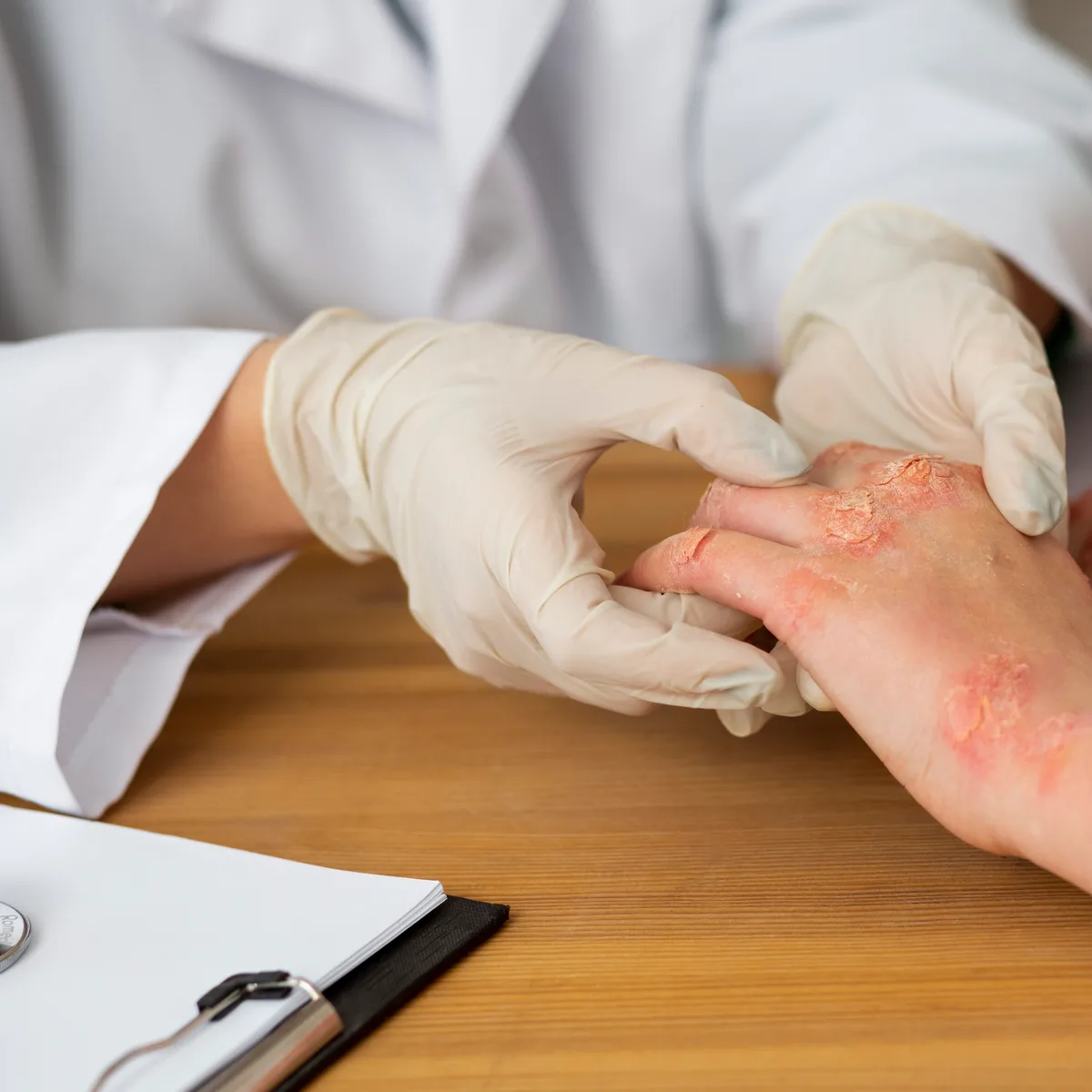

Personalized Care for Psoriasis
Psoriasis is a chronic skin condition that can cause raised, red patches covered with white or silvery scales. It can appear on the elbows, knees, scalp, trunk, or other areas of the body and may go through periods of flare-ups and remission.
At Main Line Dermatology, our team provides personalized psoriasis treatment in Wayne and West Chester, PA. We evaluate the type and severity of your psoriasis and consider your symptoms, medical history, and treatment response when developing your care plan.
Psoriasis is one of Main Line Dermatology’s core medical dermatology services, and treatment is tailored to each patient’s individual needs.
What Is Psoriasis?
Psoriasis is a chronic skin condition associated with an accelerated skin-cell growth cycle. In healthy skin, cells typically mature and shed over time. With psoriasis, this process happens much more quickly, causing cells to build up on the surface and form raised, scaly patches.
Psoriasis is not contagious and cannot be spread from one person to another. It can run in families, and symptoms may come and go throughout a person’s life.
The severity of psoriasis can vary significantly. Some people have small, localized areas while others develop more extensive involvement requiring comprehensive dermatologic care.
Types of Psoriasis
Psoriasis can appear in several different forms. Knowing which type you have can help your dermatologist determine an appropriate treatment approach.
Plaque Psoriasis
Plaque psoriasis is the most common form. It typically appears as raised, red or inflamed patches covered with silvery-white scales. Common locations include the elbows, knees, scalp, and lower back.
Guttate Psoriasis
Guttate psoriasis appears as numerous small, red, dot-like spots, often on the trunk or limbs. It occurs more frequently in children and young adults and can develop suddenly.
Inverse Psoriasis
Inverse psoriasis commonly affects skin folds, including the armpits, groin, area beneath the breasts, and folds around the buttocks and genitals. The affected skin may appear bright red, smooth, and shiny.
Pustular Psoriasis
Pustular psoriasis can cause white, pus-filled blisters surrounded by red skin. It may affect a limited area or larger portions of the body. The material inside these lesions is not infectious.
Erythrodermic Psoriasis
Erythrodermic psoriasis is an uncommon but highly inflamed form that can cause widespread, intensely red skin and extensive scaling. It may also be associated with significant itching or discomfort.
When Should You See a Dermatologist for Psoriasis?
If you have persistent or recurring patches of red, scaly, or inflamed skin, a dermatologist can help determine whether psoriasis is the cause.
Professional evaluation may be especially helpful when:
- Skin patches continue to return
- Scaling or inflammation is becoming more extensive
- Symptoms are affecting your daily life
- Psoriasis is affecting your scalp or other difficult-to-treat areas
- Previous treatment is no longer providing the results you need
- You are unsure whether your symptoms are psoriasis or another skin condition
Getting an accurate diagnosis is important because different skin conditions can produce similar-looking rashes.
How Is Psoriasis Diagnosed?
A psoriasis evaluation begins with a review of your symptoms and medical history, followed by a thorough examination of your skin.
Your dermatologist may evaluate:
- The appearance and location of your skin lesions
- How much of your skin is affected
- How long you’ve experienced symptoms
- Your history of flare-ups
- Previous treatments
- Your response to previous treatment
In some situations, additional testing may be recommended to help confirm the diagnosis or rule out another condition.
The extent of psoriasis can also help determine the appropriate treatment approach. The current Main Line Dermatology resource distinguishes between mild-to-moderate and moderate-to-severe psoriasis based on the percentage of body surface affected.
Psoriasis Treatment Options
Psoriasis treatment depends on the type, location, and severity of your condition. Main Line Dermatology’s current psoriasis information describes several approaches for managing psoriasis, including topical treatments, prescription therapies, and light-based treatment.
Topical Treatments
Topical treatments are applied directly to affected areas and may be appropriate for certain forms and severities of psoriasis. They can help address scaling, inflammation, and excessive skin-cell growth.
Light Therapy
Controlled light exposure, also known as phototherapy, can be an effective treatment option for some forms of psoriasis. Depending on the condition, different types of light-based treatment may be considered.
Treatment for More Extensive Psoriasis
Patients with more extensive or severe psoriasis may require a treatment approach that addresses the condition more broadly. Your dermatologist can discuss appropriate prescription and advanced treatment options based on your condition.
The right approach depends on where your psoriasis appears, how extensive it is, your symptoms, and how you have responded to previous treatments.
Why Choose Main Line Dermatology for Psoriasis?
30+ Years Serving Our Community
Main Line Dermatology has proudly served the community for more than 30 years, providing trusted dermatology care to generations of patients.
Experienced Dermatology Team
Our experienced dermatology team provides comprehensive medical, surgical, and cosmetic dermatology care.
Personalized Treatment
Psoriasis can vary significantly from one patient to another. We consider your diagnosis, symptoms, medical history, severity, and treatment response when developing your care plan.
Comprehensive Dermatology Care
Main Line Dermatology provides a broad range of dermatologic services, allowing patients to receive medical, surgical, and cosmetic care within one established practice.
Convenient Local Care
Our Wayne and West Chester, PA offices provide convenient access to dermatology care for patients throughout the Main Line, Chester County, and surrounding communities.
Hear From Our Patients
Choosing a dermatologist is an important decision. See what patients have shared about their experiences with Main Line Dermatology.
Get Personalized Care for Your Psoriasis
Recurring flare-ups, scaling, and inflamed skin can be difficult to manage on your own. A dermatology evaluation can help you understand your condition and identify an appropriate treatment approach.
Schedule an appointment with Main Line Dermatology to discuss your psoriasis and create a treatment plan tailored to your needs.
Psoriasis FAQs
Psoriasis is a chronic skin condition that causes the skin cells to grow and mature much faster than normal. This can result in raised, red patches covered with white or silvery scales.
No. Psoriasis is not contagious and cannot be spread through contact with another person.
The five types described by Main Line Dermatology are plaque, guttate, inverse, pustular, and erythrodermic psoriasis.
Psoriasis can appear anywhere on the body. Plaque psoriasis commonly affects the elbows, knees, scalp, and lower back, while other forms may affect the trunk, limbs, skin folds, or larger areas of the body.
Triggers vary between individuals. Potential triggers described by Main Line Dermatology include stress, skin injury, weather, certain medications, and diet.
Treatment depends on the type and severity of psoriasis. Options described by Main Line Dermatology include topical treatments, prescription therapies, and light therapy or phototherapy.
The current Main Line Dermatology resource describes psoriasis as a chronic condition and states that there is no known cure. Treatment focuses on minimizing symptoms and helping the skin heal.
You should consider seeing a dermatologist if you have persistent, recurring, spreading, or increasingly uncomfortable patches of red or scaly skin, or if your current treatment is no longer controlling your symptoms.
Main Line Dermatology provides psoriasis care at its Wayne and West Chester, PA offices, serving patients throughout the Philadelphia Main Line and surrounding Chester County communities.
Most patients do not need a referral, although some insurance plans may require one. It is best to check with your insurance provider before scheduling.