


By the evening after treatment, your skin may feel warm and a little tight, and some patients compare it to a mild sunburn. Seeing that redness appear is unsettling if nobody warned you, but it is a normal part of how the treatment works.
Knowing the sequence ahead of time takes much of the worry out of it. From the first conversation to the final days of healing, here is what the process typically looks like, so you can decide with confidence whether it fits your skin.
Before You Arrive: The Consultation and Preparation
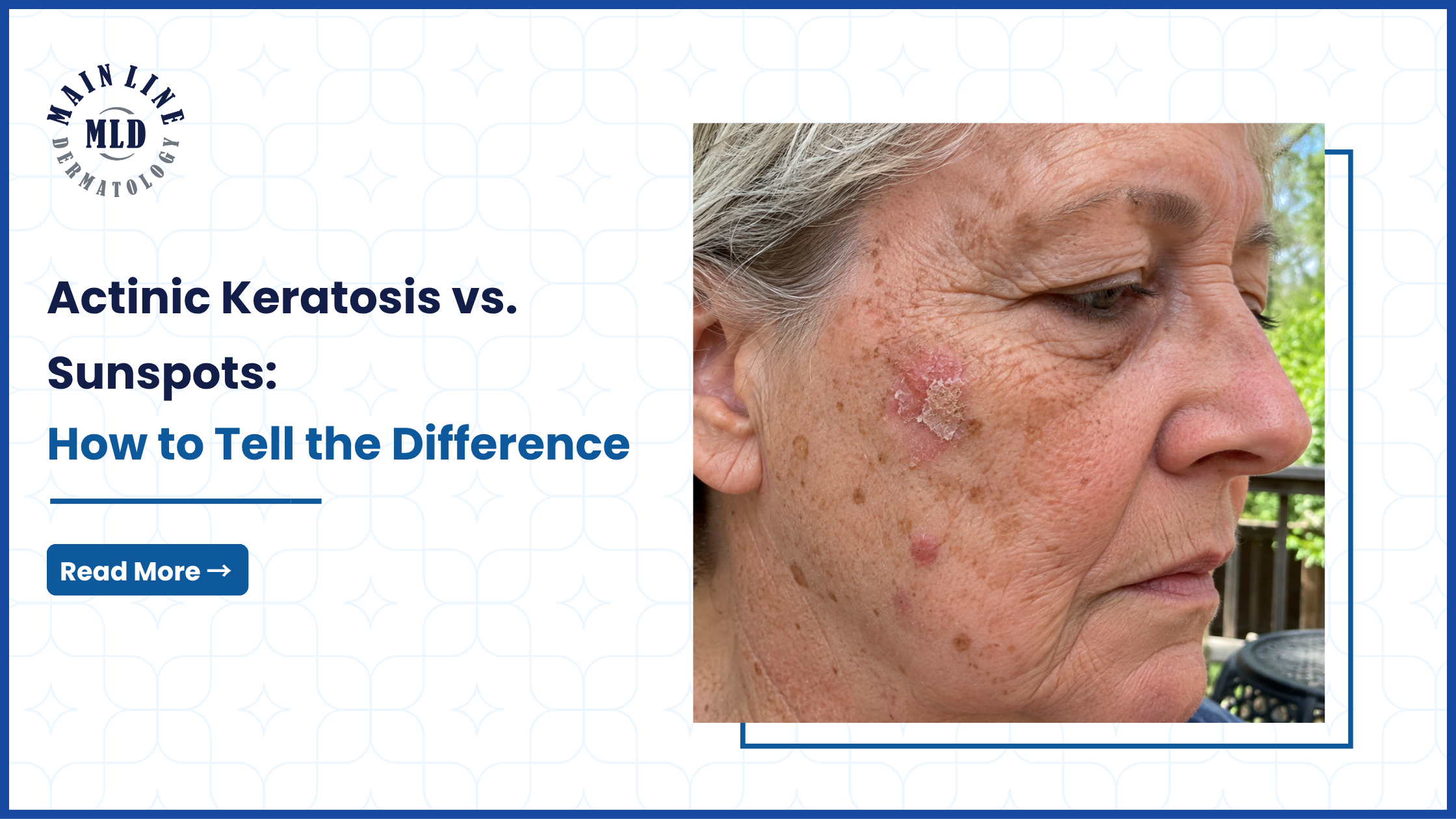
Treatment begins with an evaluation, not a procedure. Your dermatologist examines your skin, reviews your medical history and sun exposure, and confirms the spots are actinic keratoses (AKs), the rough, scaly patches caused by long-term sun damage.
Blue light therapy using LEVULAN KERASTICK plus BLU-U is designed for minimally to moderately thick AKs on the face, scalp, and arms. Your provider decides whether it suits your skin or whether another approach would serve you better.
Share anything that could affect treatment, including current medications, recent skin treatments, and any history of cold sores. Your team will also explain how to prepare, and following those instructions closely helps the day go smoothly.
The Two Steps During Your Visit
The in-office procedure is simple and happens in two parts:
1. Medication application: Your dermatologist applies the LEVULAN KERASTICK solution to the treatment area, where it is absorbed by the abnormal cells linked to AKs.
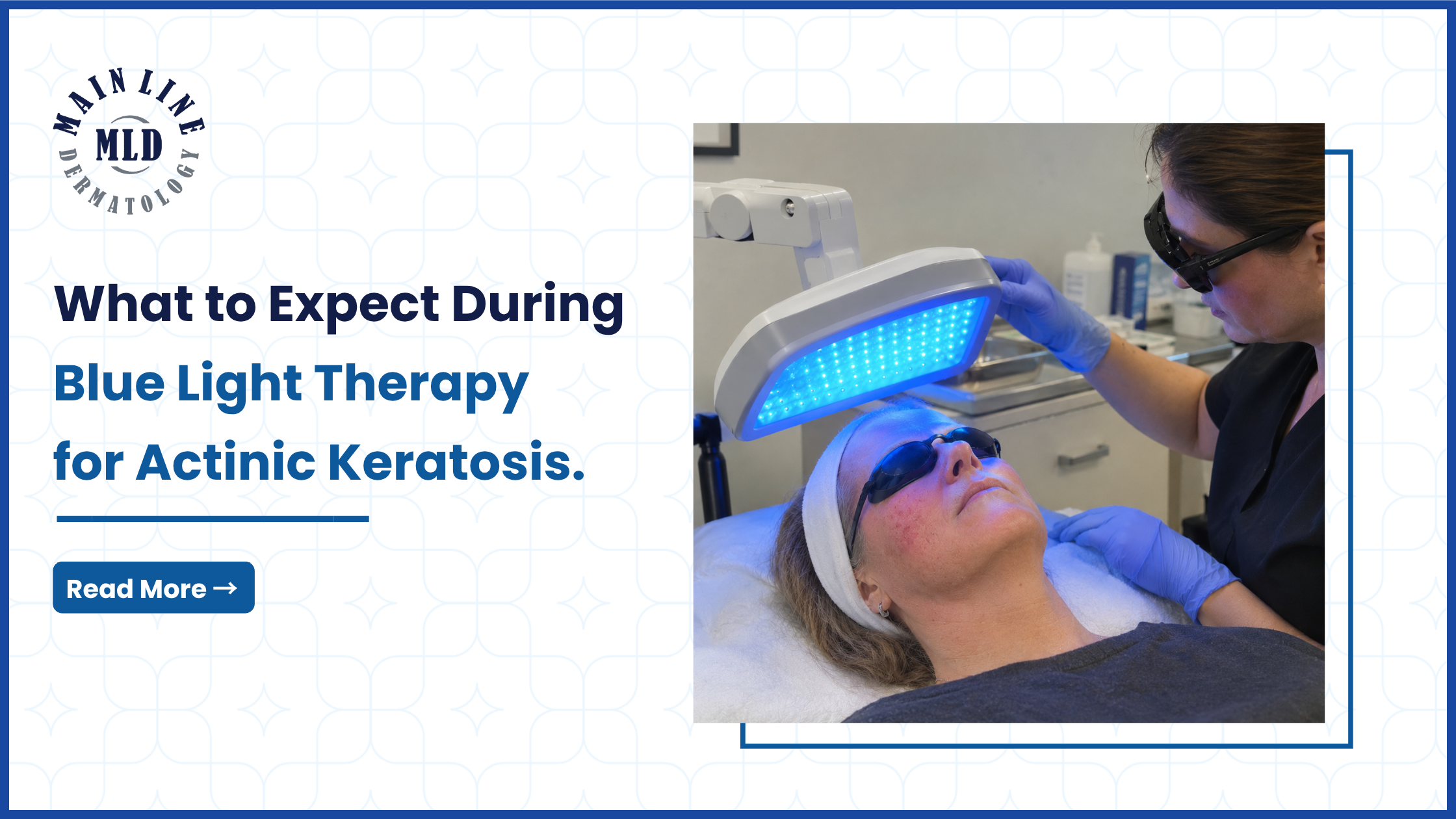
2. Blue light exposure: Once the medication has absorbed, the area is exposed to the BLU-U Blue Light Illuminator, which activates the medication and targets the lesions.
Protective eyewear is typically provided during the light portion. Some people feel warmth, tingling, or stinging while the light is on, so tell your team if you are uncomfortable.
Treatment is completed in a single visit. Your care team will let you know how much time to set aside, so you can plan your day without rushing.
The Healing Days Afterward
Healing begins once the light treatment ends, and there is no daily routine to follow for weeks afterward. Still, your skin reacts, and the reaction varies from person to person.
Redness, mild swelling, dryness, peeling, and crusting are common as the treated skin renews itself. A general pattern looks like this:
- First day or two: Warmth, redness, and possible stinging or tightness.
- Several days in: Dryness and flaking begin as treated cells shed.
- Following days: Peeling and redness gradually calm, often over one to two weeks.
Treat these changes gently. Avoid picking at flaking skin, and ask your provider which moisturizer and cleanser suit healing skin. Scarring is not commonly reported with this treatment, though your provider can discuss what to expect for your own skin.
It also helps to plan around the healing days. Some patients schedule treatment ahead of a quieter stretch at work or home, since the skin may look flushed or flaky for several days. If you wear makeup, wait until your provider says the skin has calmed enough to start again.
Call the office if redness, pain, or swelling seems stronger than what you were told to expect, or if it is not improving.
Protecting Your Skin From the Sun
Sun protection matters most right after treatment. Treated skin is unusually sensitive to light, so your provider will likely ask you to avoid direct sunlight and bright light for the period they specify, commonly around the first 48 hours. Windows do not block all of it.
Sunscreen alone may not be enough during that early window, so hats, shade, and staying indoors are the safer plan. Follow your own written instructions, since they reflect your treatment.
After that, daily broad-spectrum sunscreen becomes a long-term habit, because new sun damage keeps adding AKs. Our recommended products page lists dermatologist-vetted options.
Regular exams matter too. A yearly full-body skin exam helps catch new spots early, and it is also a good time to review what you know about skin cancer signs and types.
Deciding Whether Blue Light Therapy Is Right for You
Blue light therapy suits people who have been diagnosed with AKs or are advised to consider treating a broader area of sun-damaged skin. It treats before AKs have a chance to progress, which is why many dermatologists address them early.
It is not the only option. Freezing, prescription creams, and other procedures may be better for a single thick spot or for areas other than the face, scalp, and arms. Your provider will weigh your skin, your schedule, and your tolerance for a few days of visible healing.
Questions are welcome at any stage, including what a realistic recovery looks like around your work and social plans.
Ready to Talk Through Your Treatment Plan?
Blue light therapy is a straightforward, in-office way to treat actinic keratoses, and knowing what each stage involves makes the experience far more manageable. The healing days are temporary, and consistent sun protection afterward helps keep your skin healthy.
At Main Line Dermatology, we can evaluate your skin, confirm whether blue light therapy suits you, and guide you through each stage, from consultation to aftercare. Blue light therapy is available at our West Chester office.
Call us at (610) 696-8615 or request an appointment, and bring a list of your medications and any questions about the healing days.
FAQs
1. Does blue light therapy hurt?
Many people feel warmth, tingling, or stinging during the light portion, and the sensation usually eases once it ends. Let your team know if it becomes uncomfortable.
2. Can I go back to work the next day?
Many patients can, though visible redness or peeling may influence your plans. Ask your provider beforehand how your healing is likely to look and what sun precautions you will need.
3. How many treatments will I need?
That depends on your skin and the extent of sun damage. Your provider will explain what to expect and whether a follow-up visit or repeat session makes sense.
4. Can I wear makeup afterward?
Your provider will tell you when it is safe to resume makeup, usually once the skin has calmed. Gentle products are generally best while the skin heals.
5. Will the AKs come back?
New AKs can develop if sun damage continues, even after treatment. Daily sunscreen, protective clothing, and regular skin exams help reduce the chance.