
A full-body skin exam sounds straightforward until you're the one lying under exam room lights, unsure exactly what your dermatologist is looking for or why they're spending extra time on one particular spot.
That uncertainty is often what keeps people from booking the appointment at all. It's easy to imagine worst-case scenarios when the process itself is a mystery.
In reality, the exam moves quickly and follows a clear, predictable routine. What actually carries risk is skipping it, since early skin cancer often looks like nothing more than a spot most people would never think twice about.
What to Expect Before and During Your Exam
The appointment starts simply. After check-in, you're given a gown and a few minutes of privacy to change, typically keeping on undergarments unless a specific area needs a closer look.
From there, your dermatologist works through a head-to-toe visual exam in a set order. That includes areas people rarely check on their own, like the scalp, between the fingers and toes, and the soles of the feet, all common spots for skin cancer to develop unnoticed.
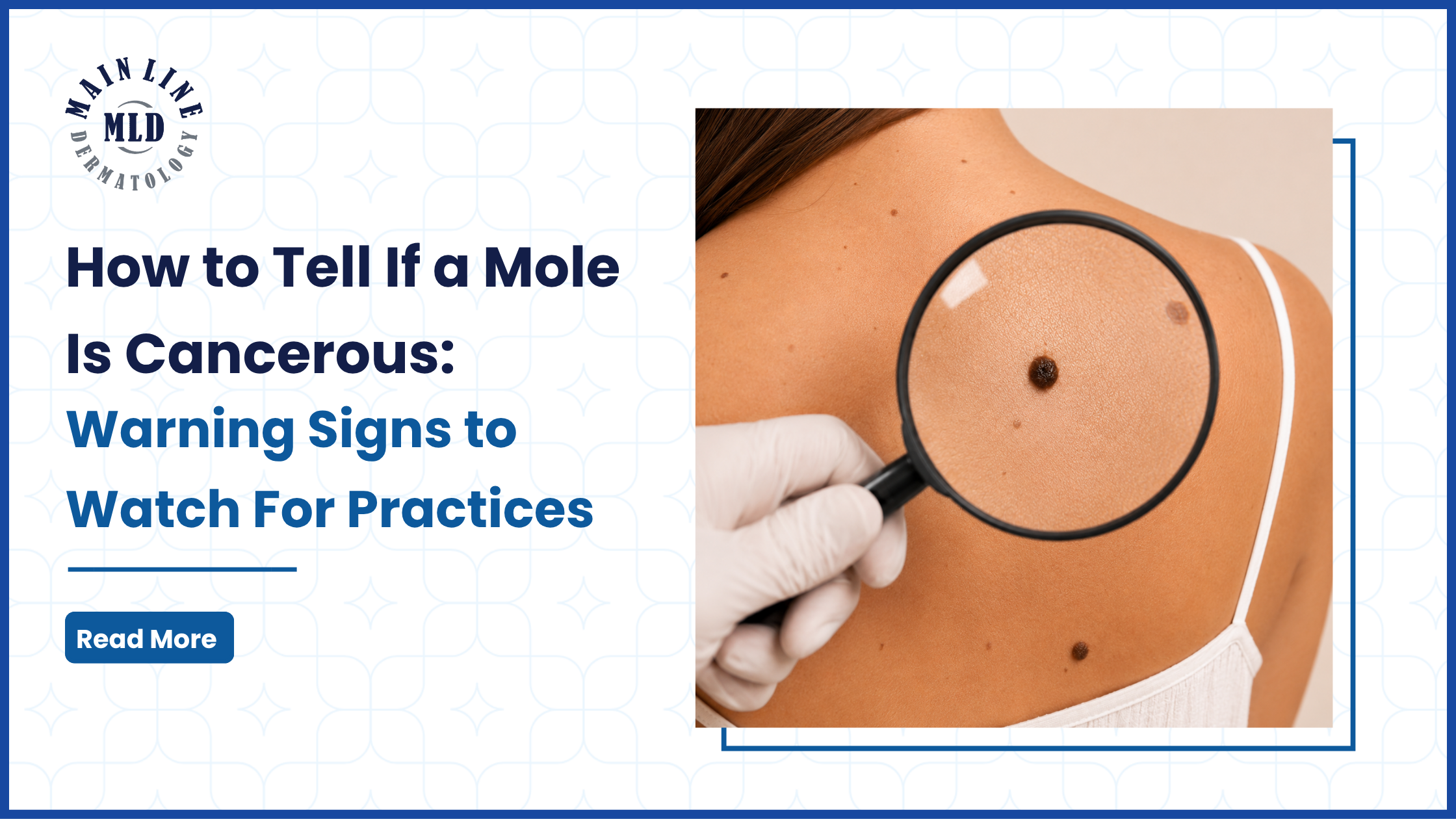
For any spot that warrants a closer look, your dermatologist may use a dermatoscope, a handheld magnifying tool with a light that reveals detail beneath the skin's surface that isn't visible to the naked eye.
Privacy is built into the process. Most dermatologists drape or examine one section of the body at a time rather than leaving you fully exposed throughout, and you can always ask what they're checking and why.
What Your Dermatologist Is Checking For
Your dermatologist is looking for anything that breaks the pattern of your normal skin, most often using the ABCDE rule to flag moles worth a closer look:
- Asymmetry: one half doesn't match the other
- Border: ragged, notched, or blurred edges instead of a smooth line
- Color: uneven shading or more than one color in the same spot
- Diameter: larger than about 6mm, roughly the size of a pencil eraser
- Evolving: any change in size, shape, color, or texture over time
A mole meeting even one of these criteria may get flagged for monitoring or a biopsy, not because it's automatically cancerous, but because it's worth ruling out. If you want to see what these signs look like in practice, the warning signs of a cancerous mole are covered in more detail in an earlier post.
Beyond moles, your dermatologist is also watching for unusual growths, changes in skin texture, and any condition worth tracking over future visits. According to the American Academy of Dermatology, the five-year survival rate for melanoma caught and treated before it spreads reaches 99%, which is exactly why this kind of visual screening matters.
How to Prepare for Your Appointment
A little preparation helps your dermatologist see your skin clearly and makes the most of your appointment time.
- Skip nail polish and heavy makeup so nail beds and any spots underneath are visible
- Wear something easy to remove rather than layers or complicated closures
- Note any new, changing, or bothersome spots beforehand so nothing gets missed
- Bring a list of current medications and any family history of skin cancer
None of this takes long, but it means less time spent explaining and more time spent examining.
What Happens If Something Suspicious Is Found
If your dermatologist spots something that needs a closer look, the next step is usually a biopsy. This involves numbing the area, removing a small sample of tissue, and sending it to a lab, a procedure that typically takes just a few minutes in the office. Results usually come back within one to two weeks.
If a biopsy comes back abnormal, your dermatologist explains the diagnosis and outlines treatment options, which may include a referral for Mohs surgery for certain types of skin cancer. It's worth remembering that most spots checked during a routine exam turn out to be harmless. Getting something checked isn't a sign it's serious, it's how you find out either way.
Who Needs One and How Often
Most adults benefit from a full-body skin exam once a year, though how often you should see a dermatologist can shift based on your personal risk factors.
You may need more frequent visits if you have fair skin, a history of sunburns, a family history of melanoma, an unusually high number of moles, or a prior skin cancer diagnosis. Your dermatologist can help set a schedule that fits your history rather than a one-size-fits-all timeline, and more detail on risk factors is available on the practice's skin cancer page.
Checking your own skin between visits is a helpful habit, but it complements a professional exam rather than replacing it. Some areas are simply easier for a trained eye to catch.
Why Skipping Your Skin Exam Is a Risk Not Worth Taking
Skin cancer often develops in places people can't easily see or check themselves, like the back, scalp, or behind the ears. That's part of why a professional exam catches things a mirror check can miss.
Outcomes can differ significantly depending on when skin cancer is caught. The same American Academy of Dermatology data shows the five-year survival rate for melanoma drops to 76% once it reaches nearby lymph nodes, and to 35% if it spreads further. Timing genuinely changes the outcome.
The reasons people put off this exam, time, cost, or discomfort, are real and understandable. But weighed against the risk of catching something months or years later than it needed to be caught, they're rarely worth it.
A full-body skin exam is quick, low-stress, and remains one of the most reliable ways to catch skin cancer while it's still highly treatable. For patients in Wayne or West Chester, Main Line Dermatology offers full-body skin exams at both locations, with board-certified dermatologists trained to spot what a mirror can't. Schedule your appointment to get checked, or to simply put your mind at ease.
FAQs
1. What should I wear to my skin exam appointment?
Choose something simple and easy to remove. You'll change into a gown for the exam itself, so complicated layers or clothing just add time to your visit.
2. Can I request a specific provider for my exam?
Yes. Most practices allow you to request a specific dermatologist or nurse practitioner when scheduling, especially if you've seen them before.
3. Will my insurance cover a routine skin cancer screening?
Many insurance plans cover a routine skin exam as a preventive service, though coverage varies by plan. It's best to confirm your specific benefits with your insurer before your visit.
4. Is a skin biopsy painful?
A biopsy involves a local numbing injection, so most patients feel pressure rather than pain during the procedure itself. Mild soreness afterward is normal and typically brief.
5. Can teens or children have a full-body skin exam too?
Yes. Dermatologists can perform age-appropriate skin exams for teens and children, particularly those with a family history of skin cancer, many moles, or a history of sunburns.