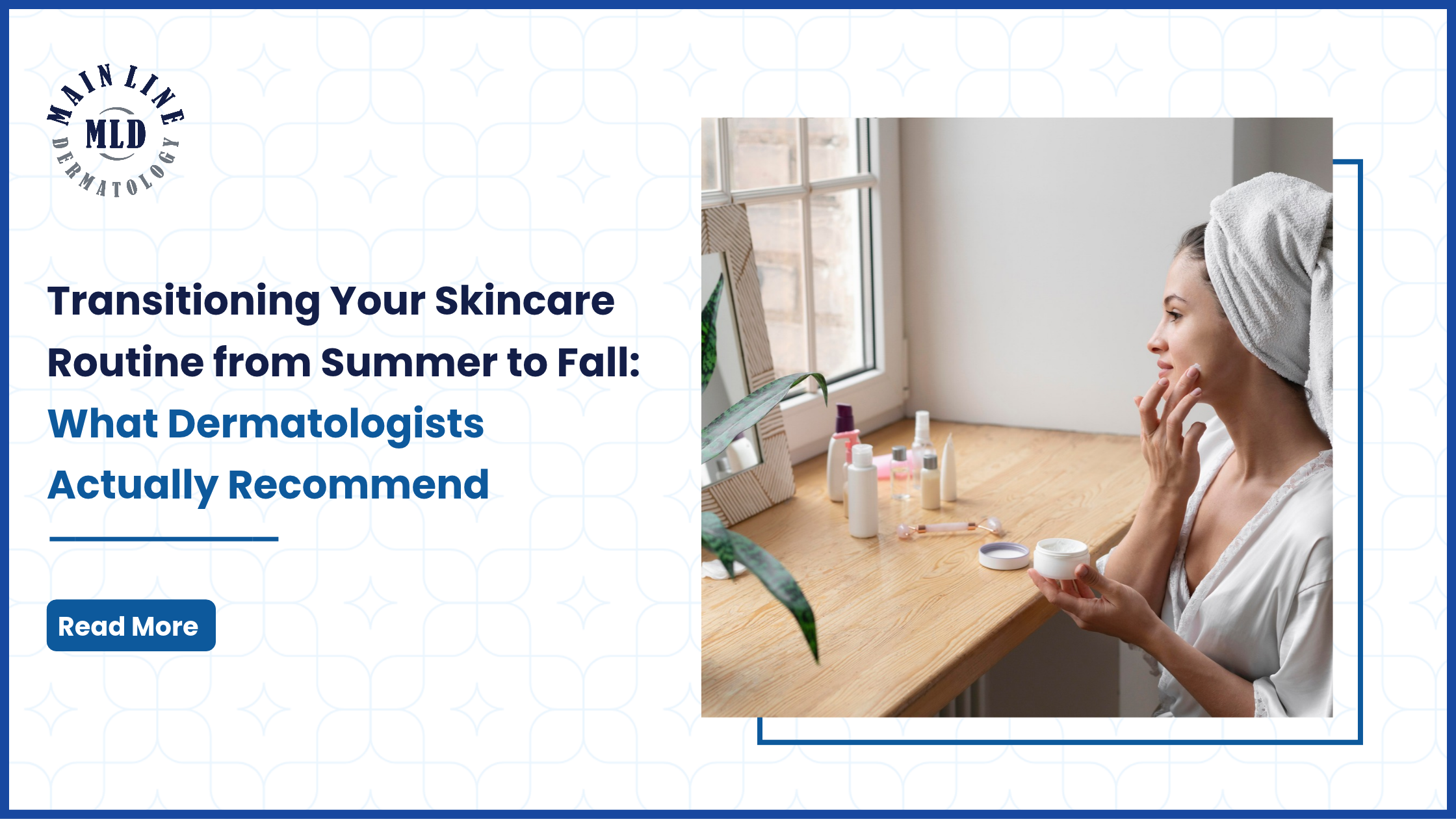
The moisturizer that worked all summer suddenly feels like it's not doing enough. Skin that looked fine in August now seems duller, tighter, maybe a little flaky around the nose or cheeks. Nothing about your routine changed, so it's tempting to wonder what went wrong.
Nothing went wrong. This is a seasonal shift, not a sign your skin is suddenly reacting badly to something. A few targeted swaps, not a full routine overhaul, are usually all it takes to catch up with what the season is doing to your skin.
Why Your Skin Reacts to the Season Change
Cooler air holds less moisture than summer air, and that drop in humidity pulls water directly out of the skin. This weakens the skin's natural barrier, the outer layer responsible for keeping moisture in and irritants out.
Once indoor heating kicks in, the effect compounds. Heated indoor air is drier still, so skin loses moisture indoors and out, with little relief either way.
This is also why a summer routine built around oil control and lightweight formulas starts to fall short. A product designed to manage humidity and sweat isn't built to replace moisture that cooler, drier air keeps drawing out.
Switching to a Gentler Cleansing and Exfoliation Routine
Foaming or oil-control cleansers, useful in summer, tend to strip more moisture than fall skin can spare. Switching to a gentler, hydrating cleanser helps the skin hold onto what it has instead of starting the day at a deficit.
Exfoliation deserves a second look too. Whatever frequency worked in summer, whether that's a few times a week or daily, is worth scaling back now. Over-exfoliating already-drier skin tends to compound irritation rather than resolve it.
If you're not sure which formulas fit this shift, the practice's recommended products page lists dermatologist-vetted options by skin concern.
Restoring Hydration and Protecting the Skin Barrier
Fall calls for richer formulas that summer skin didn't need. A moisturizer containing ceramides helps rebuild the barrier directly, since ceramides are one of the lipids that barrier is made of.
Hyaluronic acid serum is worth adding if you haven't already, since it draws moisture into the skin without the heaviness of a thicker cream. It pairs well with a richer moisturizer rather than replacing it.
Order matters when layering products. Apply anything water-based, like a hyaluronic acid serum, before heavier, oil-based products like a ceramide cream. Thinnest formulas go on first, thickest go on last, sealing everything in.
Tailoring Your Routine to Your Skin Type
Oily or acne-prone skin still needs a richer product once fall arrives. The goal isn't to skip moisture; it's choosing a non-comedogenic formula that hydrates without clogging pores.
Dry or sensitive skin usually needs the biggest jump in richness, along with gentler active ingredients across the board. This is often the skin type most affected by the seasonal shift.
Combination skin benefits from zone-treating rather than applying one product everywhere. A lighter formula on the T-zone and a richer one on drier areas, like the cheeks, tends to work better than picking a single middle-ground product.
Rosacea-prone or eczema-prone skin calls for extra caution here. Fragrance and sudden temperature swings, like stepping from a heated room into cold air, can trigger flares more easily once the barrier is already under seasonal stress.
Repairing Summer Sun Damage While Still Protecting Your Skin
Fall is a practical time to address hyperpigmentation and dark spots left over from summer sun exposure. A vitamin C serum, used consistently, can help fade this kind of discoloration over several weeks.
None of this replaces daily sun protection. Broad-spectrum SPF isn't a summer-only habit, since UV exposure keeps affecting the skin's barrier and pigmentation year-round, even on cooler or cloudier fall days.
For sun damage that doesn't respond to at-home treatment, in-office options like chemical peels can address discoloration more directly than over-the-counter products alone.
Lifestyle Habits That Support Healthy Skin Through the Transition
A few habits outside your actual product routine make a real difference once the weather turns:
- Run a humidifier once indoor heating starts, to add moisture back into the air your skin is exposed to all day
- Take shorter, cooler showers, since hot water strips natural oils that skin needs more of in fall
- Support your skin from within by staying hydrated and eating foods rich in omega-3s and antioxidants as the weather cools
None of these replace a topical routine, but they reduce how hard that routine has to work.
Recognizing When Fall Dryness Needs a Professional Opinion
Give a new routine a few weeks before judging it. Skin that stays dry, flaky, or itchy despite that, or eczema, rosacea, and psoriasis flares tied to the weather shift, points to something over-the-counter swaps won't fix. The same goes for sun damage or dark spots that haven't faded after weeks of vitamin C and daily sunscreen.
Most fall skin changes respond to a gentler cleanser, a richer moisturizer, and consistent SPF. When they don't, providers at Main Line Dermatology's Wayne and West Chester offices can take a closer look and build a routine suited to what your skin actually needs. Book a visit whenever that's the case.
FAQs
1. Do I need to stop using retinol once the weather cools down?
Not necessarily, though you may need to pair it with richer moisturizer or reduce frequency slightly, since retinol can be more drying when the air itself is already pulling moisture from skin.
2. Should I switch to a different sunscreen formula in fall?
Many people find a slightly richer, more hydrating sunscreen formula more comfortable in fall than the lightweight, oil-control versions favored in summer. The SPF level itself should stay the same.
3. Why does my skin break out more when the seasons change?
A weakened barrier can trigger breakouts just as easily as it triggers dryness, especially if your routine hasn't adjusted yet. Switching cleansers too abruptly can also play a role.
4. How long does it take to see results from a new skincare routine?
Most people notice a difference in hydration within one to two weeks, though barrier repair and fading discoloration typically take four to six weeks of consistent use.
5. Will my routine need to change again once winter arrives?
Often, yes, though usually as a smaller adjustment than the summer-to-fall shift. Colder, drier winter air may call for an even richer moisturizer or an added occlusive layer.