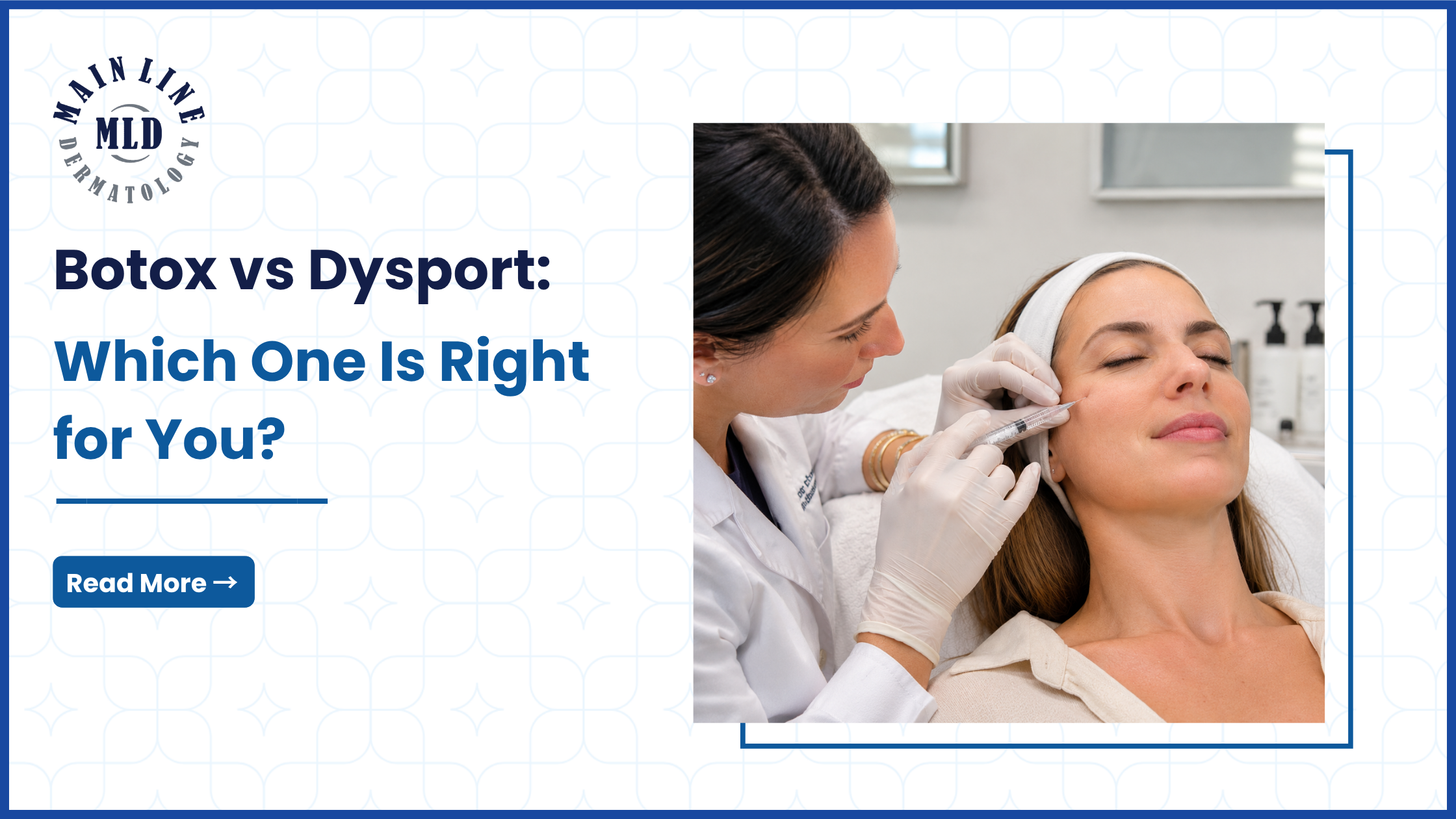



Ask a few friends whether they prefer Botox or Dysport and you will hear confident opinions, often from people who have only tried one. The truth is quieter. The two products are close relatives, and the better choice usually depends on your face, not on a brand.
Understanding where they overlap and where they differ makes a consultation far more productive. You walk in with better questions, and your provider can explain why one product fits your goals better than the other.
What Botox and Dysport Have in Common
Both are neuromodulators made from botulinum toxin type A, and both are FDA-approved. They work the same basic way, temporarily relaxing the small facial muscles that create expression lines when you frown, squint, or raise your brows.
The treatment areas overlap as well. Either product can soften forehead lines, frown lines between the eyebrows, and crow’s feet around the eyes. Appointments are quick, require little to no downtime, and aim for a natural look that keeps your expressions intact.
Results are temporary for both. Many patients return for maintenance visits every few months, and a consistent schedule helps keep results steady. If you want an overview of what is offered, the practice’s Botox and Dysport treatments are a useful starting point.
Where the Two Products Differ
The differences are real, though smaller than marketing suggests. Dysport and Botox use different formulations, and that shows up mainly in how they are dosed and how quickly some patients notice changes.
| Feature | Botox | Dysport |
|---|---|---|
| Generic name | onabotulinumtoxinA | abobotulinumtoxinA |
| Dosing units | Botox units | Dysport units, not equal to Botox units |
| Typical onset | Often within several days | Some patients notice changes a bit sooner |
| Full effect | Around two weeks | Around two weeks |
| Typical duration | About three to four months for many patients | Similar, with some variation between individuals |
| Spread | Often favored for precise, smaller areas | May spread slightly more, which some providers prefer for broader areas |
Units deserve a closer look. A Botox unit and a Dysport unit are not interchangeable, so fifty units of one never equals fifty of the other. Providers adjust dosing for each product, which is why comparing unit counts or prices between the two can be misleading.
Providers also differ on how much the products truly diverge, since researchers have not reached full agreement on onset, spread, and duration.
How a Provider Chooses Between Them
Your provider is not picking a favorite. They are matching a product to your anatomy and your goals. During a consultation, they evaluate your facial structure, skin, and muscle movement before recommending a plan.
Several factors usually come into the decision:
- The area being treated, such as a small area around the eyes or a broad forehead
- How strong your facial muscles are and how active your expressions are
- How you responded to a previous product, if you have had treatment before
- Your timeline, including any upcoming event
- Your preferences, based on what you have heard or experienced
Neither product is automatically better. A thoughtful provider leans toward the one most likely to give balanced, natural results for you, and will explain the reasoning in plain terms.
Starting Fresh or Switching Products
If you have never had a neuromodulator, either option is a reasonable place to begin. Your provider may start conservatively, then adjust at a follow-up once they see how your muscles respond.
Switching is also possible. Some patients try Dysport after years of Botox, or the reverse, out of curiosity or for a different feel. Tell your provider what you used before, how long it lasted, and what you liked, since that history shapes dosing for the new product.
It helps to avoid switching right before a big event. A product change is easier to evaluate when you have time to see the result and make a small adjustment if needed.
Many patients also pair injectables with dermal fillers to address volume loss, which a neuromodulator alone does not restore.
Questions Worth Asking at Your Consultation
Going in with a few questions makes the visit more useful. Ask which product your provider recommends for your treatment area and why. Ask how many weeks to expect before the full effect appears, and when a follow-up check makes sense.
It also helps to ask what a natural result looks like for your face, how often maintenance visits are typically needed, and what happens if you are not satisfied with the outcome. A provider who explains the plan clearly and welcomes questions is usually one who plans carefully.
Bring photos from times you felt happy with your appearance, if you have them. They show your provider what looking like yourself means to you.
Find Out Which One Fits Your Goals
Botox and Dysport share the same purpose, and the better choice depends on your treatment area, your muscles, and your history. A consultation replaces general opinions with an answer built around you.
A consultation at Main Line Dermatology puts both products side by side. We look at how your expressions move, talk through what each option would do for your treatment area, and give you a clear recommendation. There is no pressure to decide on the spot.
Book your consultation today.
FAQs
1. Is Dysport cheaper than Botox?
Prices are not directly comparable because the units differ. Dysport often requires more units than Botox for a similar effect, so the total cost depends on your treatment plan, not the per-unit number.
2. Does one last longer than the other?
For most patients, duration is similar, often around three to four months. Individual factors such as dose, treatment area, and muscle strength usually matter more than the brand.
3. Can I switch from Botox to Dysport?
Yes. Share your treatment history with your provider so they can adjust the dose for the new product and plan a follow-up to check your results.
4. Will either product look more natural?
Natural results depend mostly on dosing and injection technique. Both products can look subtle and balanced when planned around your anatomy and expressions.
5. Are there side effects to expect with either one?
Mild effects such as temporary redness, swelling, or small bruises can occur with both. Your provider will review what to expect and give aftercare instructions before you leave.