Run a fingertip over the spot on your cheek, the back of your hand, or the top of your scalp. Does it feel smooth, or does it catch like fine sandpaper? That small detail often says more than color does.
Many people assume every mark left by years outdoors is a harmless sunspot. Some are. Others are precancerous patches, and the two can look alike. Knowing what to look for, and what to feel for, helps you decide when a spot needs a closer look.
What Sunspots Look and Feel Like
Sunspots, also called age spots or liver spots, are flat areas of extra pigment that build up after years of sun exposure. Their medical name is solar lentigines. They are not cancerous and do not turn into skin cancer on their own.
A typical sunspot is smooth, evenly colored, and ranges from light tan to dark brown. It sits flat against the skin, causes no pain or itching, and stays about the same for years. Sunspots appear where skin gets the most sun, such as the face, hands, shoulders, and forearms.
They are a sign of cumulative sun exposure, which is why a dermatologist may still want to look at your skin as a whole. But a smooth, stable, flat brown spot is usually a cosmetic concern, not a medical one.
What Actinic Keratoses Look and Feel Like
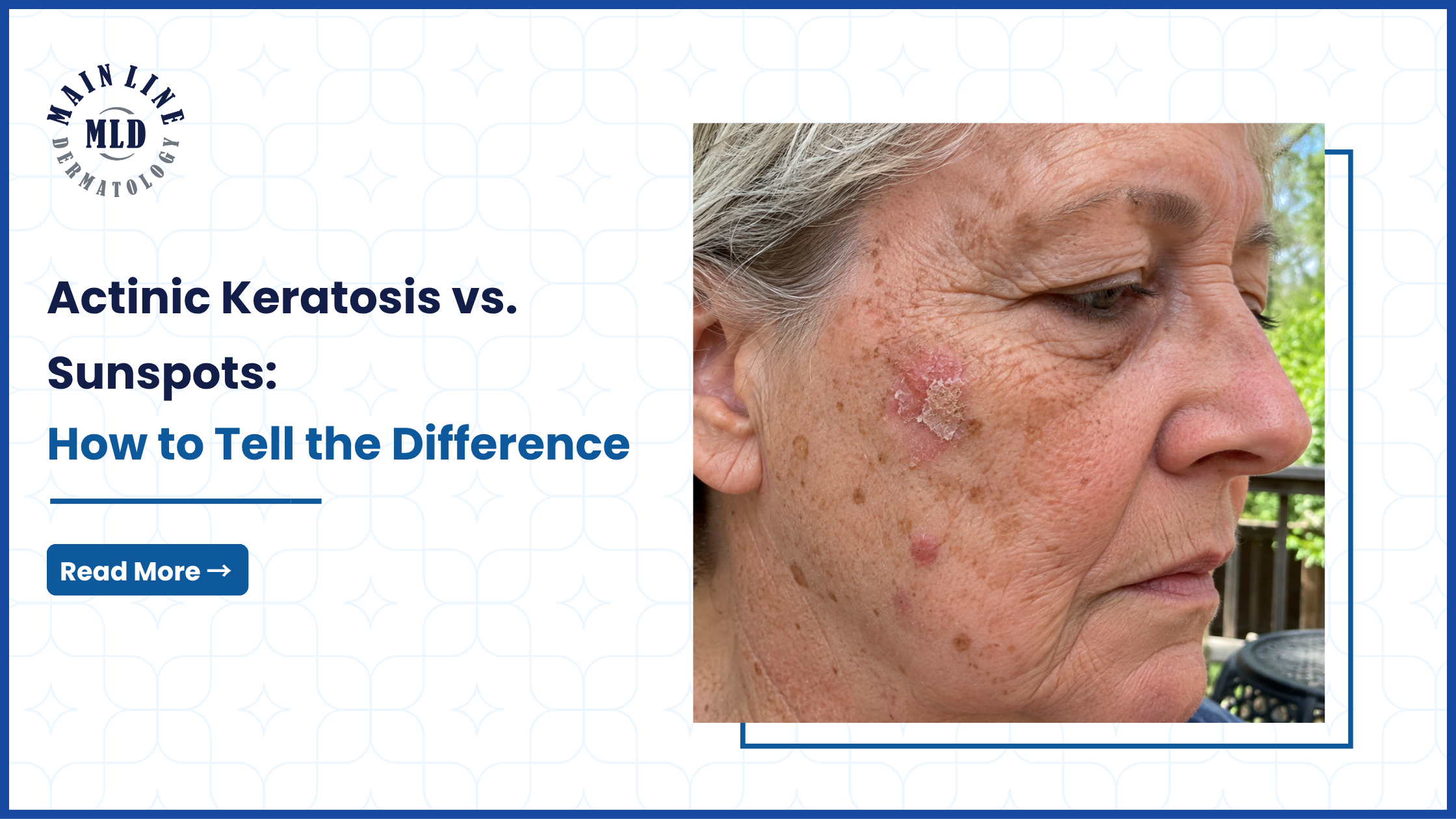
An actinic keratosis, often shortened to AK, develops when skin has been badly damaged by ultraviolet light from the sun or indoor tanning. The American Academy of Dermatology describes AKs as rough, scaly patches or bumps, and notes that you can often feel one before you can see it.
AKs come in many colors, including red, pink, skin-colored, gray, yellow, brown, and white. Some look like a pimple or a patch of irritated skin. Some itch, burn, sting, feel tender, or bleed. Others cause no symptoms at all.
Color is not a reliable guide. The AAD notes that AKs more commonly resemble age spots in people with skin of color, which makes texture an especially useful clue. A scaly surface may also flake off and return, leading people to believe the spot healed when it did not.
Simple Clues You Can Check at Home
Looking in the mirror is a good start, though it cannot replace an exam. These clues can help you decide whether a spot is worth mentioning to a dermatologist:
- Texture: Sunspots are smooth and flat, while AKs usually feel rough, dry, or like sandpaper.
- Surface: Sunspots stay clear, while AKs may have scale, crust, or a raised edge.
- Sensation: Sunspots are quiet, while AKs may itch, sting, or feel tender.
- Behavior: Sunspots hold steady, while AKs may flake, return, or slowly grow.
- Location: Both appear on sun-exposed skin, but AKs are common on the scalp, ears, lips, and backs of the hands.
If a spot checks more than one box on the AK side, it is worth having examined. Even when it looks like a plain sunspot, any spot that darkens, changes shape, or grows deserves a professional opinion, since not every brown mark is a sunspot.
Why Actinic Keratoses Deserve Attention
Left untreated, some AKs turn into squamous cell carcinoma, a form of skin cancer. There is no way to predict which ones will progress, and many squamous cell carcinomas begin as an AK. That uncertainty is the main reason dermatologists prefer to evaluate and treat them early.
AKs most often appear after age 40, though they can develop sooner, especially in people with fair skin, a history of sunburns, or years of outdoor work. They are also more likely when the immune system is weakened.
Some signs call for prompt attention. The AAD advises having a dermatologist examine any growth that resembles a horn, and a lip that stays dry, scaly, or white may also point to a precancerous change.
If you want to understand the broader picture, the types and warning signs of skin cancer are worth reviewing.
When to Have a Spot Examined
Make an appointment when a rough or scaly patch lasts for several weeks, bleeds, itches, hurts, or keeps coming back. The same goes for a new spot that appears on well-worn sun-exposed skin, particularly if you spent years outdoors.
A dermatologist can usually tell the difference by examining the area, sometimes with a handheld magnifier called a dermatoscope. If something looks uncertain, a small biopsy can provide a clear answer.
A skin cancer screening is a simple way to have every spot checked at once, and the same guidance applies to moles, which are covered in more detail in how to tell if a mole is cancerous.
If an AK is confirmed, treatment options vary. Your provider may suggest freezing, a prescription cream, or a light-based approach such as blue light therapy for AKs on the face, scalp, or arms.
A Spot That Looks Harmless Is Still Worth Checking
Sunspots are harmless, but a rough, scaly patch is not something to wait out. Feeling the texture, noticing changes, and acting on them gives you a head start while treatment is simple, and a quick exam can settle the question either way. Early evaluation also keeps every treatment option open.
If a spot on your face, scalp, ears, or hands has you unsure, the dermatologists at Main Line Dermatology can take a look at both the Wayne and West Chester offices.
Schedule a skin check and leave with a clear answer instead of weeks of wondering, whether the spot is a sunspot or something worth treating.
FAQs
1. Can a sunspot turn into skin cancer?
A true sunspot is benign and does not become cancerous. However, some spots that look like sunspots are actually something else, so any spot that changes in color, shape, or size should be examined.
2. Do actinic keratoses go away on their own?
They may seem to fade or flake off, but they often return. Because the underlying sun damage remains, a dermatologist should still evaluate a spot that comes and goes.
3. Can actinic keratosis appear on darker skin tones?
Yes. AKs can develop on any skin tone and may look more like a flat age spot on skin of color, so a rough texture is a better clue than color alone.
4. Does sunscreen get rid of actinic keratoses?
Sunscreen helps prevent new sun damage and protects the skin you have, but it does not clear existing AKs. Those typically need treatment from a dermatologist.
5. How often should I have my skin checked if I have had AKs?
Frequency depends on your history and risk factors. Your dermatologist can recommend a schedule, which is often more frequent for people who have had AKs or skin cancer before.